3.0 Design Ideation
3.1 Background and Steps
The purpose of these steps is to maximize the number of ideas for our final product. Using this process we are aiming to get three main concepts. We started by brainstorming all the ideas, features and styles of our projects. After that, we categorized the different ideas into four main categories which are environmental, daily life helper, farmers and common features . Moreover, we colored every category differently in order to make it easy to track every idea. Next we ranked all the ideas in a scale from one to three with one being the most important and three being the least important. Finally, we started designing our concepts based on our top ranked ideas.
3.2 Brainstorming Steps and Ideas
We brainstormed about 100 ideas and project concepts by thinking about the required features that we generated from the user needs list. We started with three different empty boards and started to fill them with the concepts/ideas sticky notes.
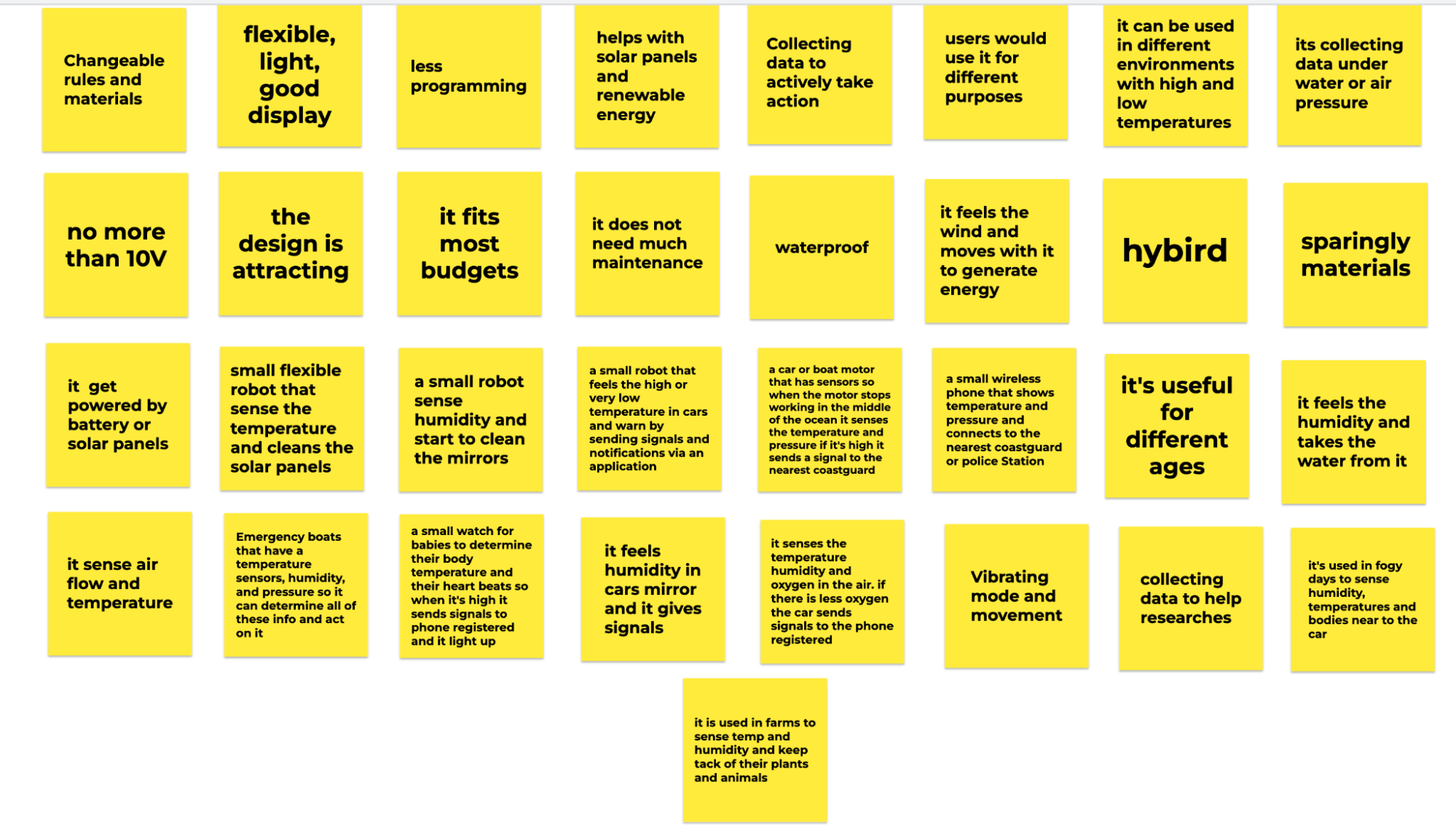
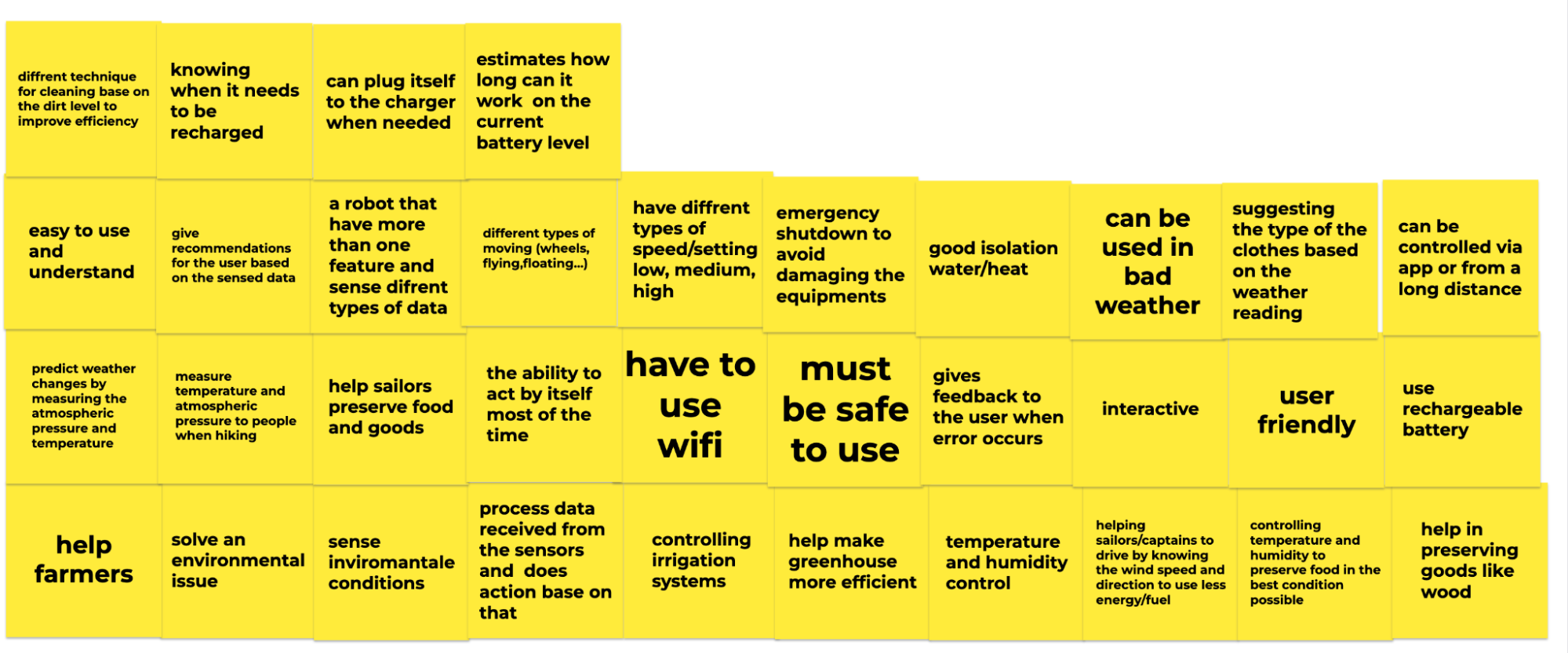
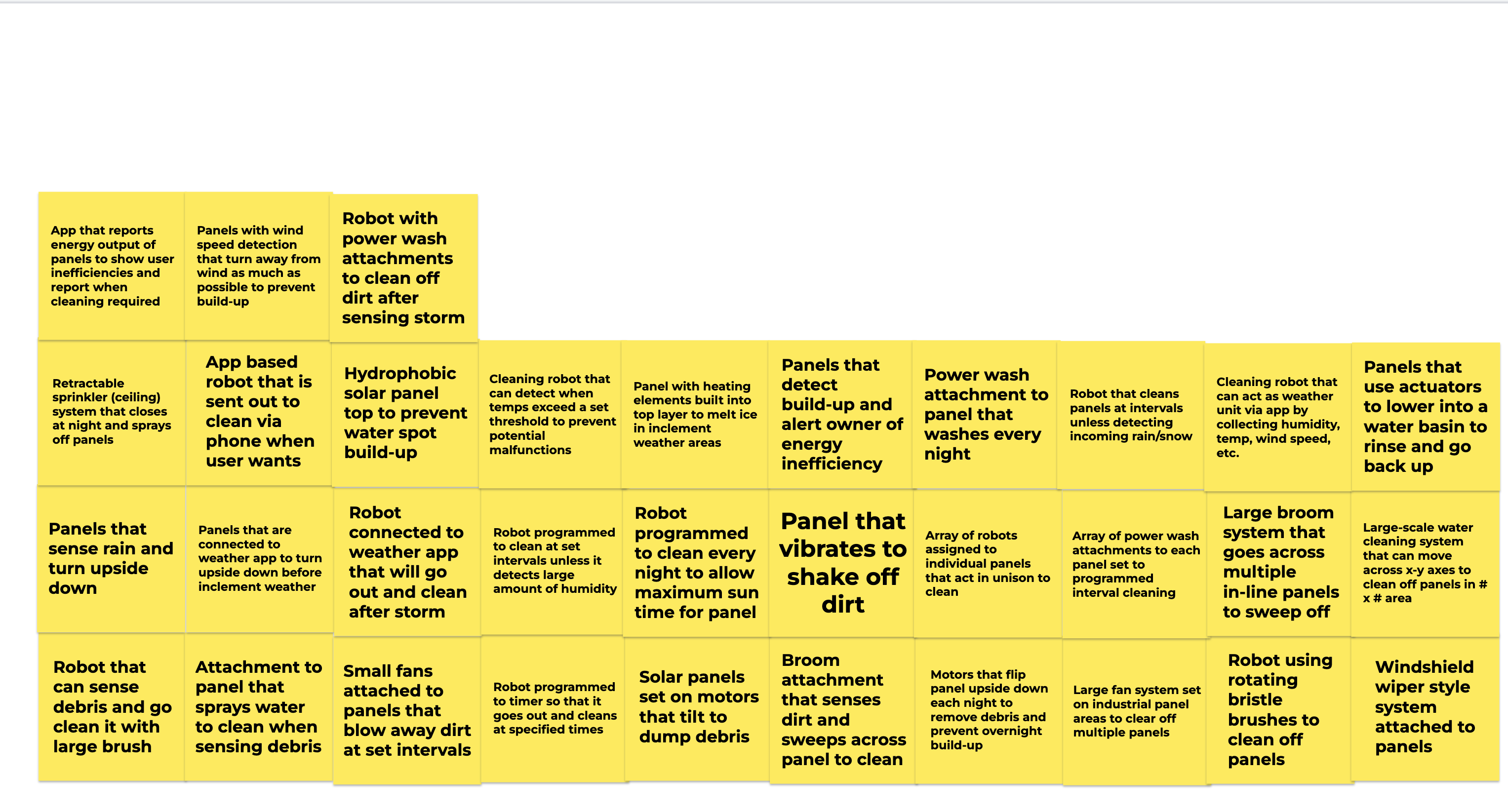
Figure 7 - Design Ideation
-
Grouping
After brainstorming our ideas we grouped them into the following four different colors:
Table 11. Grouping Key
| Pink | Daily Life Ideas |
|---|---|
| Green | Environmental |
| Yellow | Farmers Help |
| Blue | Common Features |
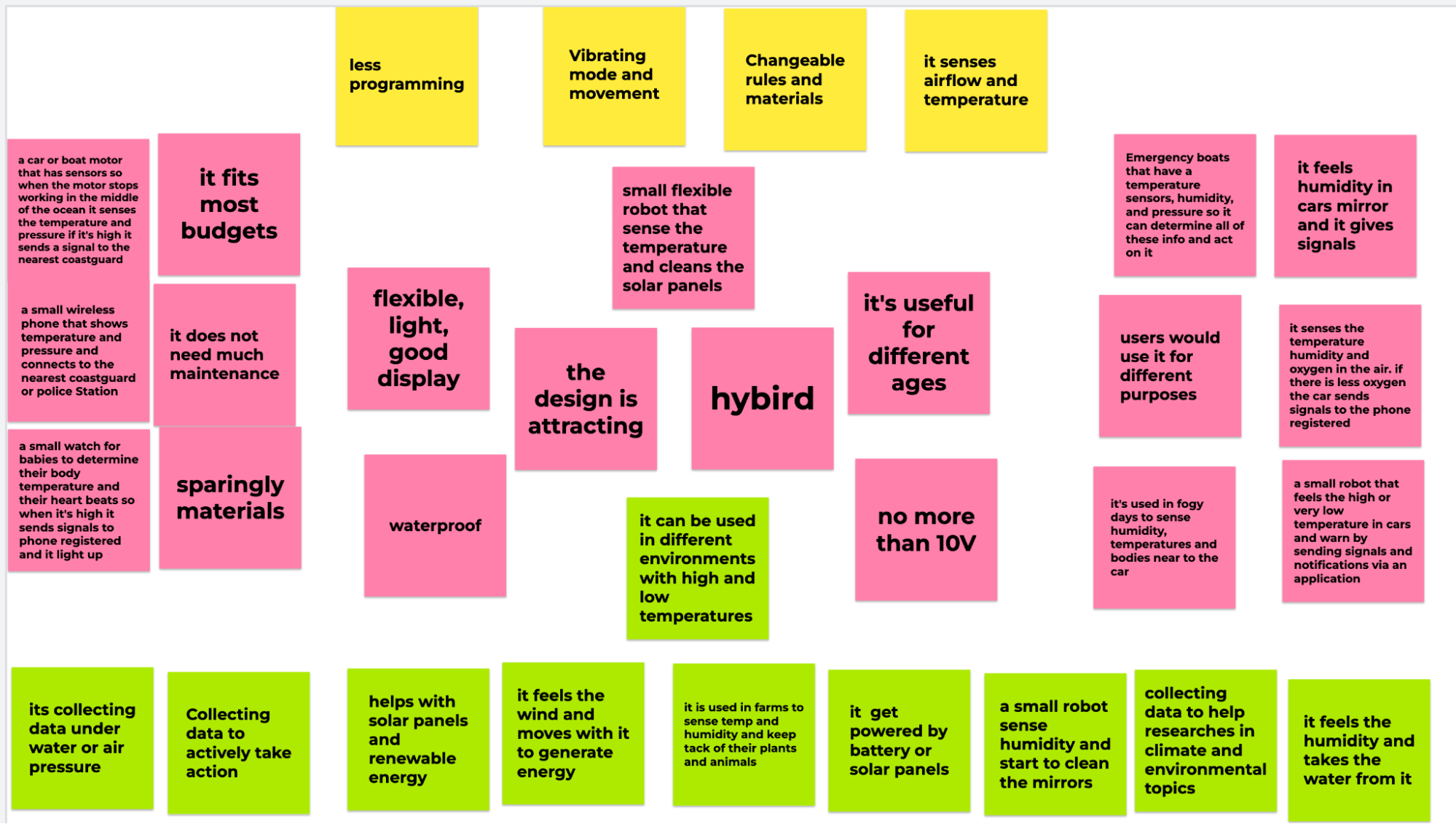
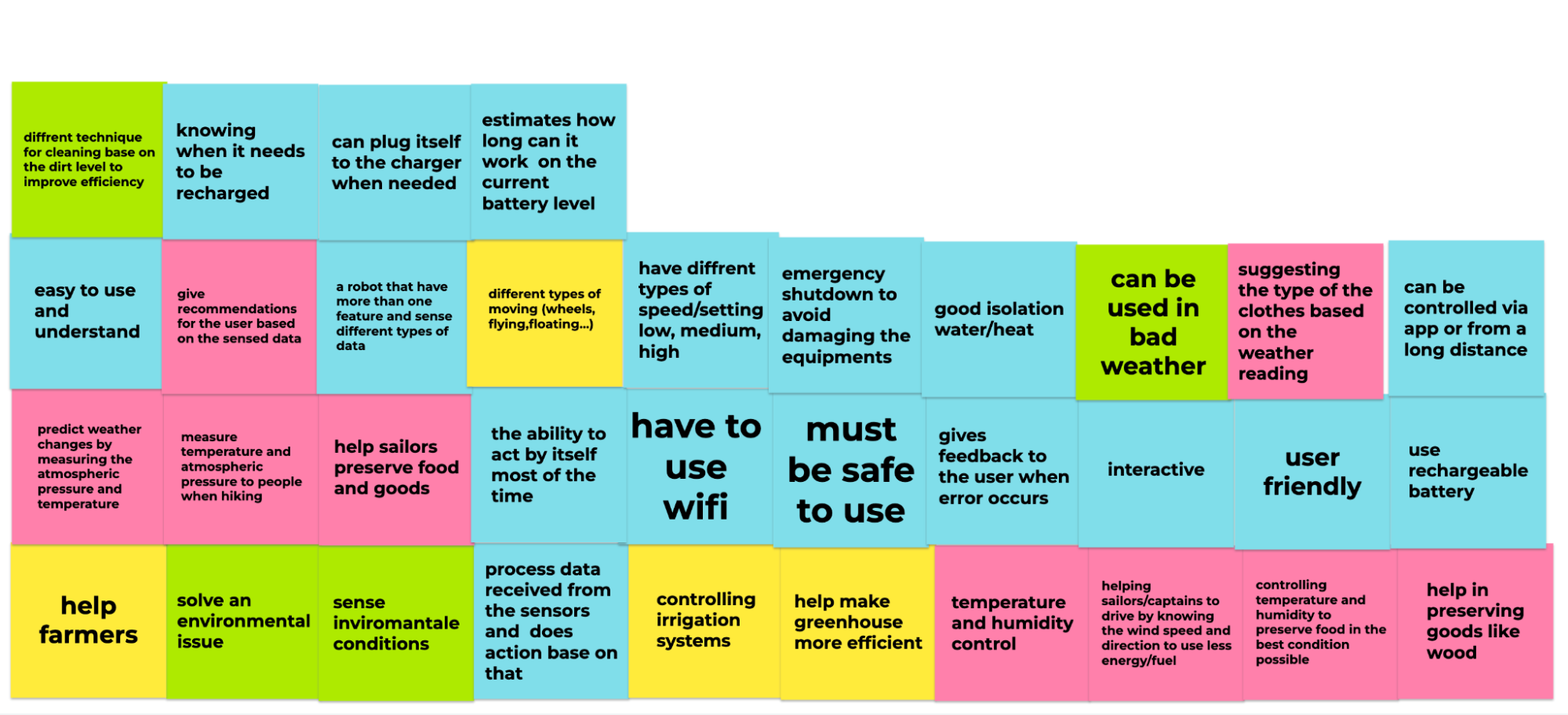
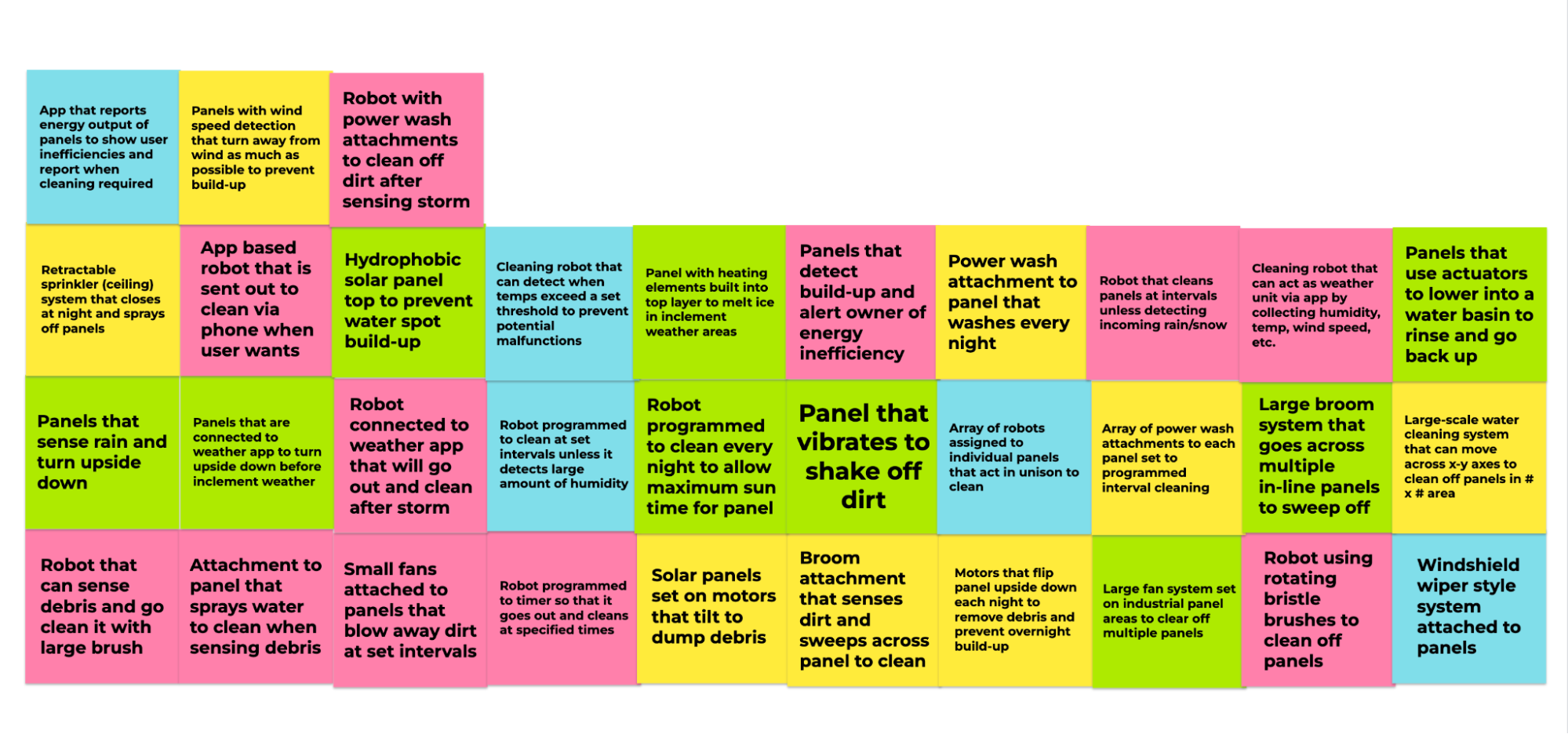
Figure 8 - Grouped Ideas
-
Ranking
Then, we moved every group of ideas to their own slide and ranked them according to the importance level and requirements for the project with number one being the most important.
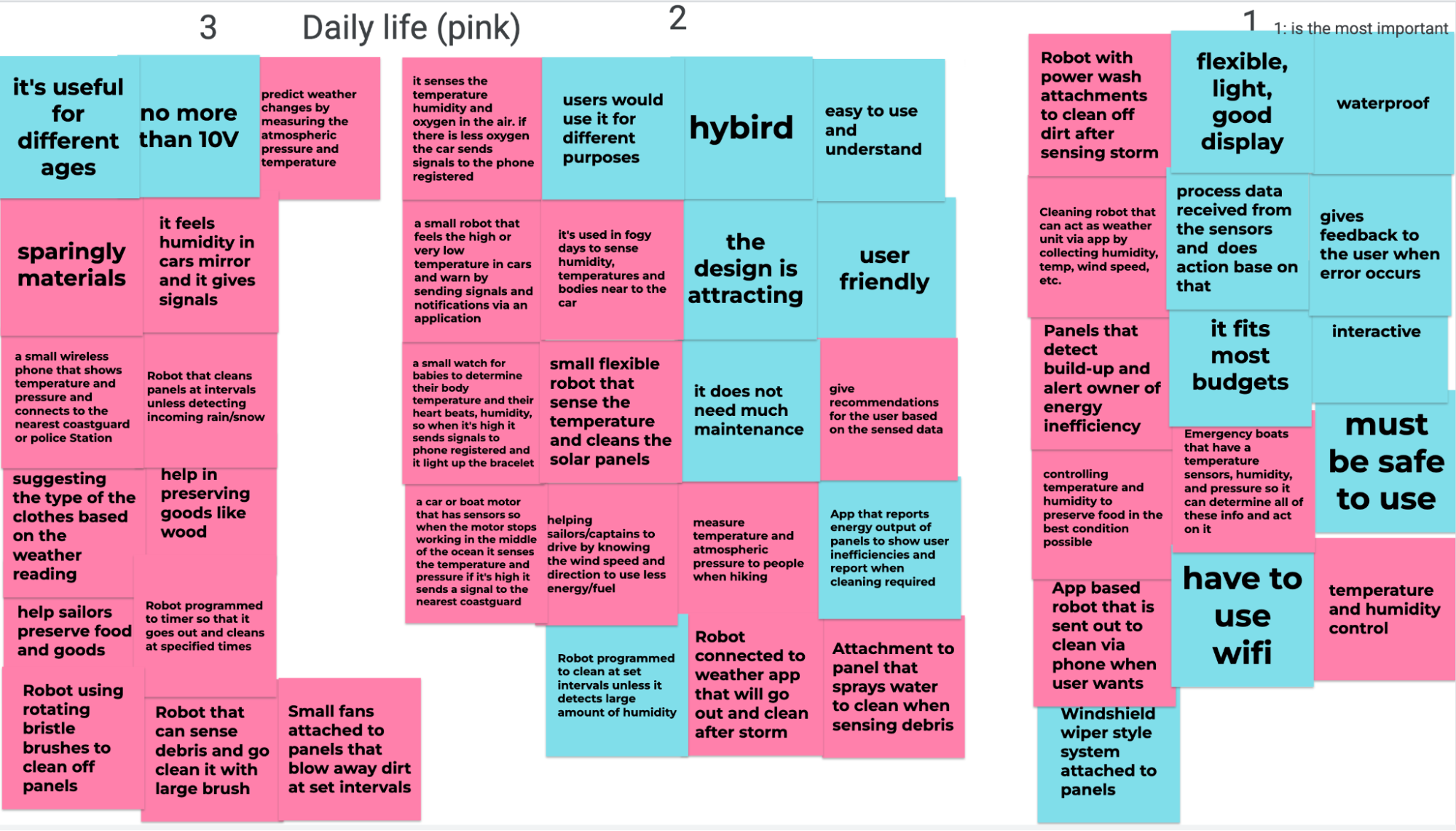

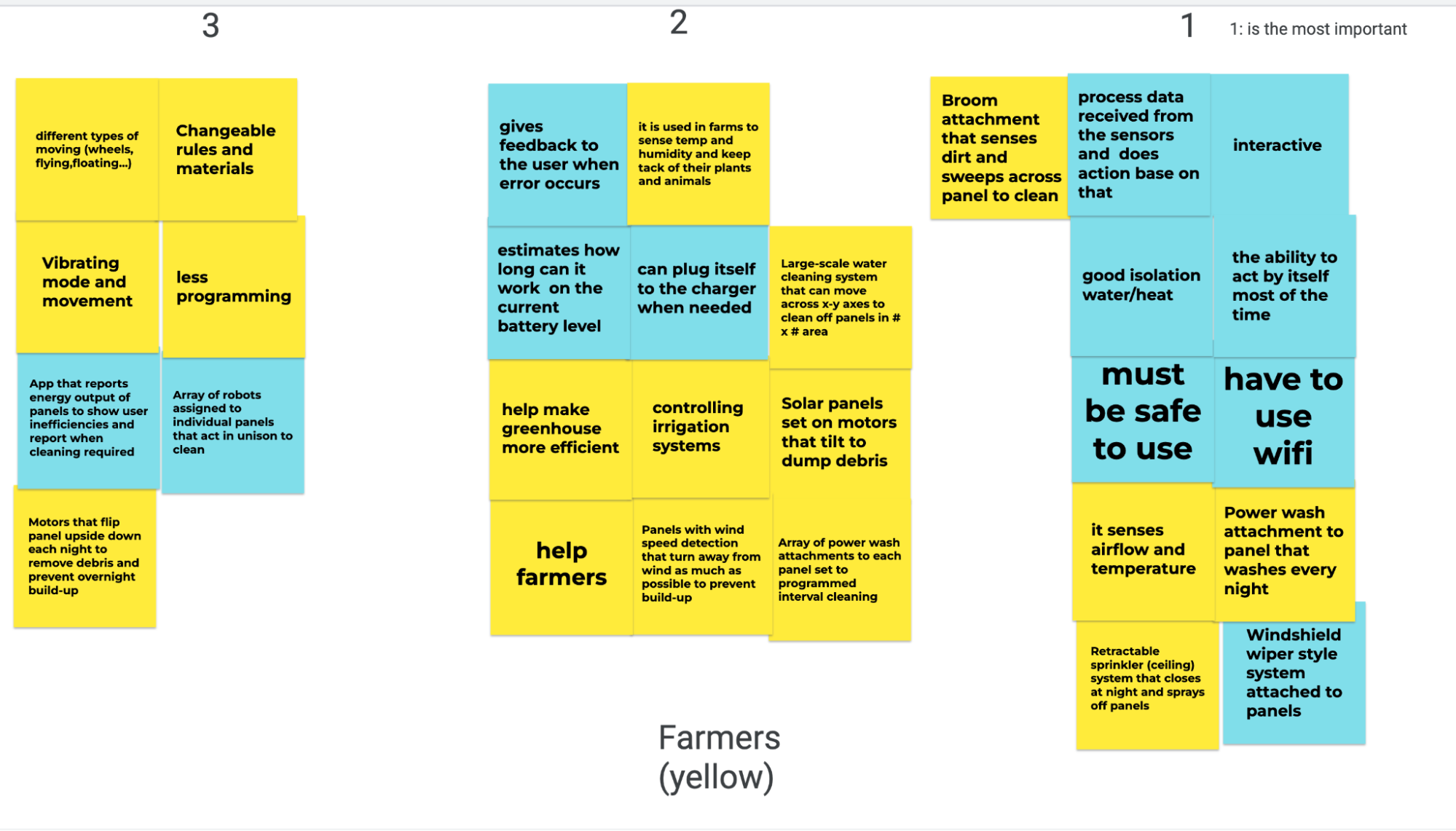
Figure 9 - Ranked Ideas
3.3 Product Concept Sketches
Design concept #1
The concept behind this design is to provide the market with fully equipped and ready to use solar panels. It has sensors to detect the dust, temperature and humidity. When it detects a certain amount of humidity or dust it sends signals to the washer system, and the whole system collaborates to get rid of the extra water and dust. This design is effective and full of different features.
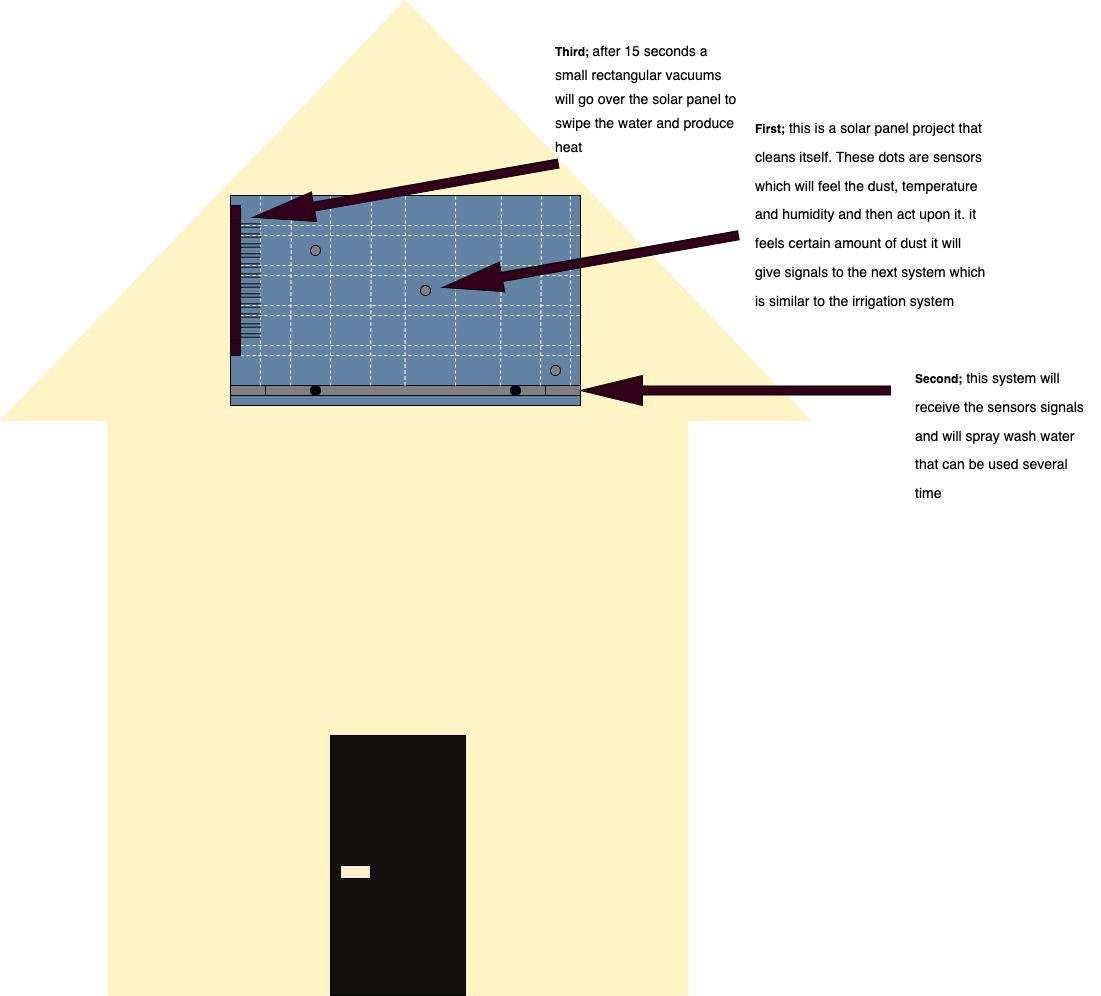
Figure 10 - First Product Concept
Design Concept #2
The idea of this concept is a heat emitting robot that moves on the solar panels after a snow storm to melt the snow from the roof to. When the robot reads the temperature and wind speed that indicate the end of the storm for it to start to warm up and melt the snow. It also has a charging station that is powered by solar panels.
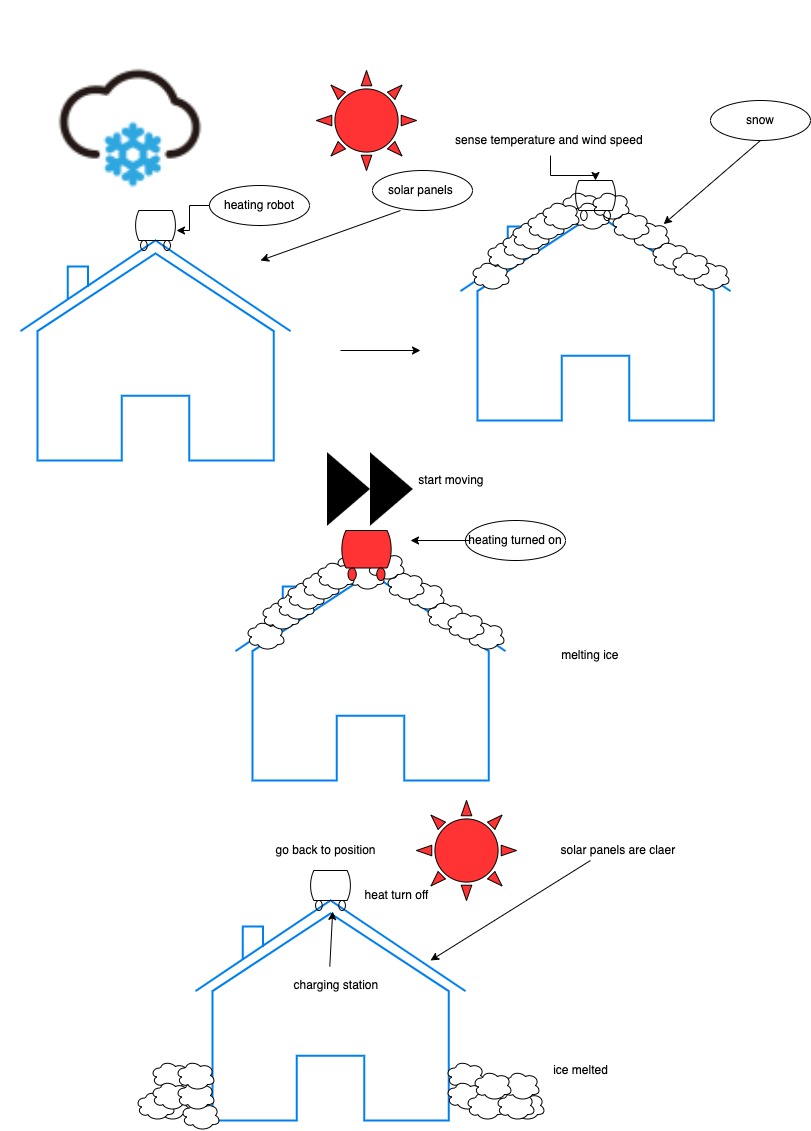
Figure 10 - Second Product Concept
Design Concept #3
A nylon brush attached to a motor and fixture to sweep across a solar panel. The controller is located underneath the panel and works in tandem with a humidity sensor and wind speed sensor. This lets the controller decide a good time to clean based on whether rain is likely or high winds have blown more dust and debris onto the panel.
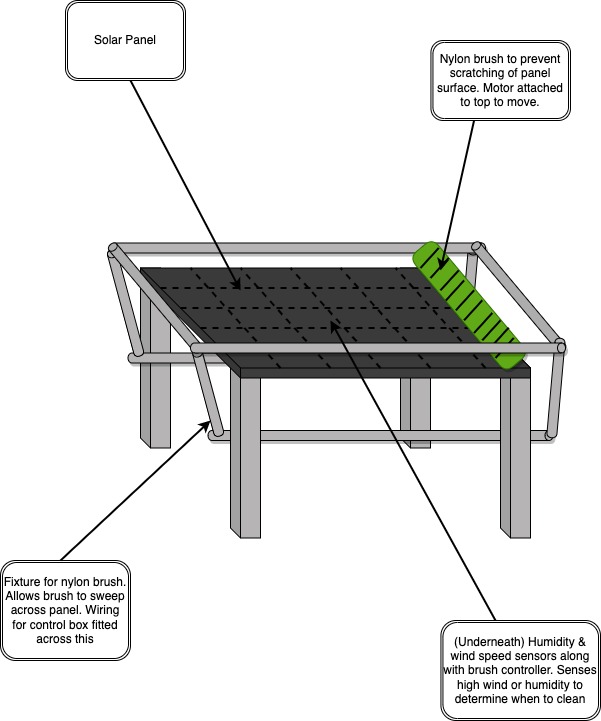
Figure 12 - Third Product Concept
Design Ideation Assessment
Overall, the team now has a clear idea of what the final project will look and function like. The step of design ideation made all of us on the same page while we were brainstorming and designing. Finally we are looking for more feedback to make the final decision.
Selected Design
In the decision-making process for selecting the team’s design concept, the team evaluated all the proposed concepts and ultimately decided on the third concept due to its simplicity and potential impact. The team also considered the feasibility of each concept and how well it aligned with the project goals. Additionally, the team combined good ideas from the design ideation stage to further refine the chosen concept which is the third concept. Overall, the decision was made based on a combination of factors, including feasibility, impact, and simplicity.
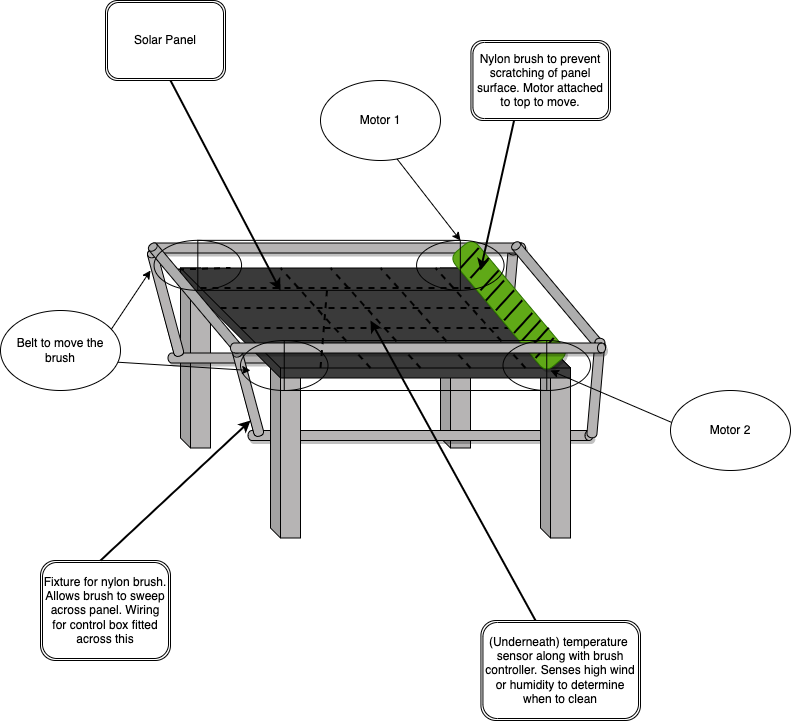
Figure 13 - Selected Design
Design Ideation Assessment
Overall, the team now has a clear idea of what the final project will look and function like. The step of design ideation made all of us on the same page while we were brainstorming and designing. Finally, we are looking for more feedback to make the final decision.
4.4 Selected Design
In the decision-making process for selecting the team’s design concept, the team evaluated all the proposed concepts and ultimately decided on the third concept due to its simplicity and potential impact. The team also considered the feasibility of each concept and how well it aligned with the project goals. Additionally, the team combined good ideas from the design ideation stage to further refine the chosen concept which is the third concept. Overall, the decision was made based on a combination of factors, including feasibility, impact, and simplicity.